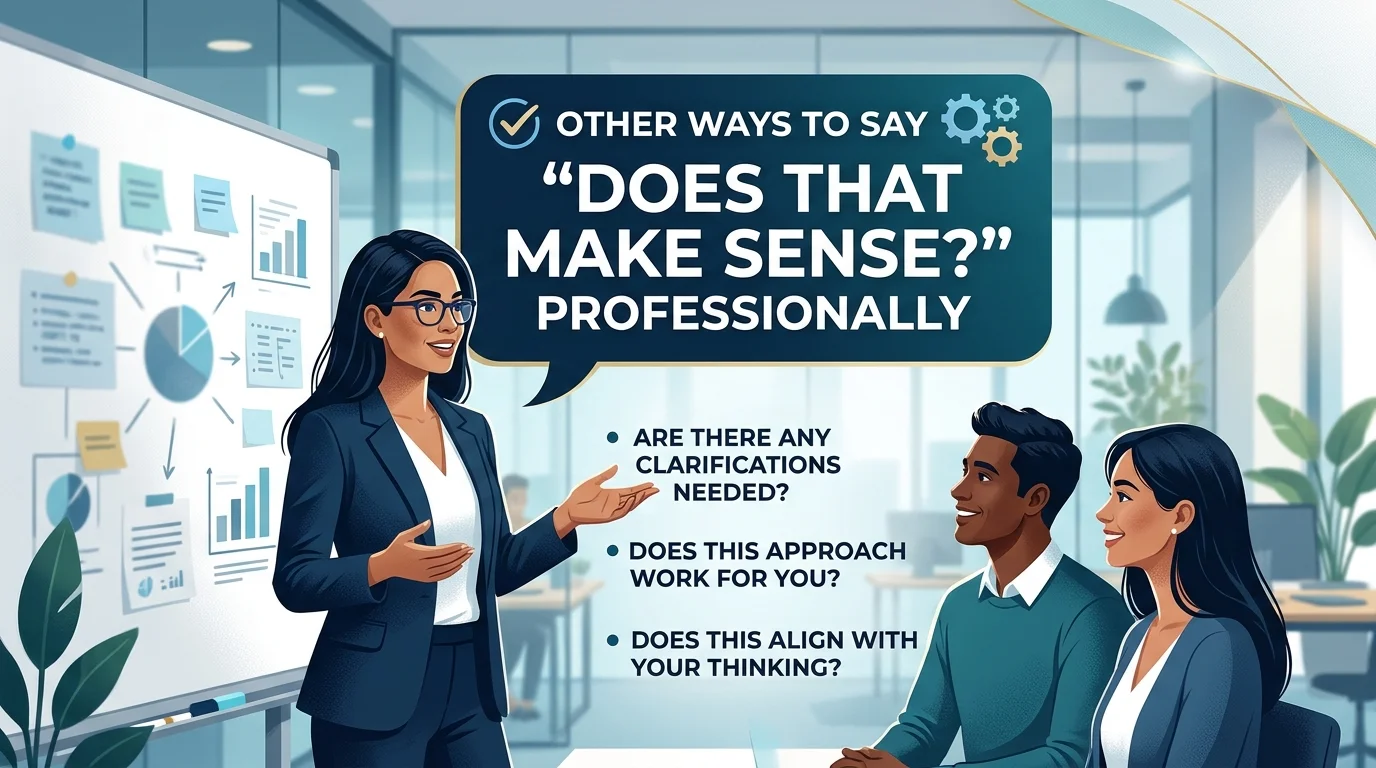
In professional communication, explaining an idea clearly is only half the job. You also need to make sure your audience understands what you mean. Whether you are leading a meeting, sending an email, training a new employee, or explaining a project to a client, checking for understanding helps prevent confusion and keeps conversations productive.
The phrase “Does that make sense?” is a common way to check whether someone understands an explanation. However, in a professional setting, it can sometimes sound too casual or unintentionally suggest that the listener is having difficulty understanding something. Choosing a different expression can help you sound more respectful, confident, and approachable.
Fortunately, there are many natural alternatives you can use at work. Expressions such as “Is that clear?”, “Would you like me to clarify anything?”, and “Does that align with your understanding?” allow you to check comprehension while matching the situation and your relationship with the other person.
In this guide, you will discover more than 20 professional alternatives to “Does that make sense?” You will learn what each phrase means, when to use it, and how it sounds in real conversations. These expressions can help you communicate more effectively in emails, presentations, meetings, workplace discussions, and everyday professional interactions.
Why Use Alternatives to “Does That Make Sense?” Professionally?
“Does that make sense?” is not inherently rude or unprofessional. Many coworkers use it naturally during conversations. However, its meaning and tone can depend on how you say it, the situation, and the relationship between the speakers.
For example, asking a teammate, “Does that make sense?” after explaining a simple task may sound perfectly friendly. Asking a client the same question after presenting a complicated proposal might feel less polished.
Here are several reasons to consider using alternatives.
1. To Sound More Professional
Professional communication often benefits from precise and respectful language. Instead of using the same question repeatedly, you can choose a phrase that fits the purpose of your conversation.
For example:
- “Does that make sense?” is conversational.
- “Is everything clear so far?” sounds professional and approachable.
- “Would you like me to clarify any part of the proposal?” sounds helpful and client-focused.
2. To Avoid Making Someone Feel Uncomfortable
Some people may interpret “Does that make sense?” as a suggestion that they might not understand a straightforward explanation. This is not necessarily what the speaker intends, but the wording can occasionally create that impression.
A question such as “Would it help if I explained any part in more detail?” puts the emphasis on offering support rather than testing the listener.
3. To Encourage Questions and Feedback
A good workplace conversation should allow people to ask questions without feeling embarrassed.
Phrases such as “What questions do you have?” or “Is there anything you’d like me to go over again?” encourage people to speak openly.
4. To Check Agreement, Not Just Understanding
Understanding an idea is different from agreeing with it. If you are presenting a plan, you may need to confirm that everyone agrees with the next steps rather than simply checking whether they understand them.
For example, “Are we aligned on the next steps?” checks agreement and shared expectations more directly than “Does that make sense?”
25 Professional Alternatives to “Does That Make Sense?”
The following expressions work in different workplace situations. Some are suitable for formal emails, while others are better for meetings, presentations, or conversations with coworkers.
Common Professional Alternatives
1. “Is That Clear?”
Meaning: This question asks whether the information is easy to understand.
When to use it: Use this phrase after explaining instructions, outlining a process, or sharing important details with a team. It is direct and efficient, particularly when clarity matters.
Tone: Professional, direct.
Examples:
- “The report needs to be submitted by Thursday at noon. Is that clear?”
- “Please save your work before closing the application. Is that clear?”
Tip: This expression can sound firm or authoritative, especially when spoken by a manager. Use a warm tone, or choose a softer alternative when speaking with clients or colleagues who may feel uncomfortable asking questions.
2. “Is Everything Clear So Far?”
Meaning: This phrase asks whether the listener has understood everything explained up to that point.
When to use it: It works well during presentations, training sessions, project updates, and step-by-step explanations.
Tone: Professional, polite, friendly.
Examples:
- “We’ve covered the first two stages of the onboarding process. Is everything clear so far?”
- “Before we move to the next slide, is everything clear so far?”
Why it works: The words “so far” make the question feel less demanding. They also give the listener a natural opportunity to ask for clarification before the conversation continues.
3. “Are We on the Same Page?”
Meaning: This expression asks whether everyone shares the same understanding or expectations.
When to use it: Use it when discussing project goals, deadlines, responsibilities, decisions, or plans with coworkers and clients.
Tone: Professional, conversational, collaborative.
Examples:
- “The launch date is still set for November 15. Are we on the same page?”
- “Before we finalize the budget, I want to make sure we’re on the same page about the priorities.”
Why it works: This phrase emphasizes shared understanding rather than asking whether one person understands another. It is especially useful when several people need to coordinate their work.
4. “Does That Sound Clear?”
Meaning: This question checks whether an explanation sounds understandable.
When to use it: Use it during conversations, online meetings, training sessions, or presentations when you want a natural way to pause and check comprehension.
Tone: Friendly, professional, polite.
Examples:
- “You’ll receive an email once your account is approved. Does that sound clear?”
- “We will review the first draft on Monday and make revisions on Tuesday. Does that sound clear?”
Tip: This expression is slightly softer than “Is that clear?” because it sounds more conversational. It is a useful choice when you want to be direct without sounding overly formal.
5. “Do You Have Any Questions So Far?”
Meaning: This question invites the listener to ask questions about the information you have shared.
When to use it: It is particularly effective after explaining a complicated subject, presenting a proposal, or describing a new procedure.
Tone: Professional, polite, approachable.
Examples:
- “That covers the main features of the software. Do you have any questions so far?”
- “I’ve explained how the reimbursement process works. Do you have any questions so far?”
Why it works: Rather than asking someone to confirm their understanding, it gives them an open invitation to discuss anything they find confusing.
Formal Alternatives to “Does That Make Sense?”
These expressions are useful when communicating with senior leaders, external clients, business partners, or other people in formal professional settings.
6. “Would You Like Me to Clarify Anything?”
Meaning: This question offers to explain any part of the information more clearly.
When to use it: Use it after presenting a detailed proposal, explaining a policy, or sending someone important information.
Tone: Formal, professional, polite.
Examples:
- “I’ve outlined the proposed changes to the contract. Would you like me to clarify anything?”
- “The attached document explains the updated requirements. Would you like me to clarify any details?”
Why it works: It communicates willingness to help without implying that the listener has failed to understand.
7. “Is There Anything You’d Like Me to Explain Further?”
Meaning: This phrase asks whether the listener wants a more detailed explanation of a particular point.
When to use it: It is suitable for client meetings, presentations, reports, and conversations about technical or unfamiliar subjects.
Tone: Formal, polite, professional.
Examples:
- “That concludes my overview of the implementation plan. Is there anything you’d like me to explain further?”
- “I’ve summarized the main findings in the report. Is there anything you’d like me to explain further?”
Tip: Use this expression when you have already provided a substantial explanation and want to offer additional detail without repeating everything.
8. “Have I Explained That Clearly?”
Meaning: This question asks whether your explanation was understandable.
When to use it: Use it when explaining a complicated idea, giving instructions, or communicating information that must be understood accurately.
Tone: Professional, considerate, polite.
Examples:
- “The payment will be processed within three business days. Have I explained that clearly?”
- “The new system will replace the existing process next month. Have I explained that clearly?”
Why it works: The wording places the focus on your explanation rather than the listener’s ability. It can help create a more supportive communication environment.
9. “Is My Explanation Clear?”
Meaning: This question checks whether your explanation communicates the intended information.
When to use it: It works well in formal presentations, technical discussions, instructional sessions, and conversations involving important details.
Tone: Formal, professional, direct.
Examples:
- “The first stage involves reviewing the application, while the second stage covers approval. Is my explanation clear?”
- “The revised policy applies to all new contracts beginning next quarter. Is my explanation clear?”
Tip: This phrase is appropriate when precision matters. In a relaxed conversation with a close coworker, however, it may sound more formal than necessary.
10. “Does That Address Your Concerns?”
Meaning: This question asks whether the information you provided has responded to the listener’s worries or objections.
When to use it: Use it during client discussions, problem-solving meetings, negotiations, or conversations about complaints and potential risks.
Tone: Professional, polite, reassuring.
Examples:
- “We’ve added the requested security measures to the proposal. Does that address your concerns?”
- “The revised schedule includes an additional review period. Does that address your concerns?”
Important distinction: This phrase does not simply ask whether someone understands. It asks whether your explanation or proposed solution responds to a specific concern.
11. “Is There Anything That Needs Further Explanation?”
Meaning: This question asks whether any part of the information requires more detail or clarification.
When to use it: It is suitable for formal meetings, technical briefings, policy discussions, and training sessions.
Tone: Formal, professional, neutral.
Examples:
- “We’ve reviewed the updated compliance requirements. Is there anything that needs further explanation?”
- “The report covers the findings and recommendations. Is there anything that needs further explanation?”
Why it works: It keeps the conversation focused on the information itself. This can be useful when speaking to a group rather than addressing one person directly.
Professional Alternatives for Meetings and Presentations
The following phrases are particularly useful when you need to confirm that colleagues understand a plan, presentation, or set of responsibilities.
12. “Are We Aligned on This?”
Meaning: This expression asks whether the people involved agree on an idea, decision, or plan.
When to use it: Use it during planning meetings, team discussions, project reviews, and leadership conversations.
Tone: Professional, collaborative, direct.
Examples:
- “We’ll prioritize customer feedback before beginning the next development cycle. Are we aligned on this?”
- “The marketing team will prepare the materials, and the sales team will handle outreach. Are we aligned on this?”
Important distinction: Being aligned generally means sharing an understanding or agreement. If you only want to check whether someone understands a technical explanation, “Is everything clear so far?” may be more accurate.
13. “Are the Next Steps Clear?”
Meaning: This question checks whether everyone understands what needs to happen next.
When to use it: Use it at the end of meetings, project discussions, training sessions, or task assignments.
Tone: Professional, practical, direct.
Examples:
- “Please submit your feedback by Wednesday and send the final version on Friday. Are the next steps clear?”
- “The design team will revise the mockups, and we’ll review them next week. Are the next steps clear?”
Why it works: It turns a general question about understanding into a practical check of responsibilities and actions.
14. “Does That Align With Your Understanding?”
Meaning: This phrase asks whether your explanation matches what the other person already knows or believes about the subject.
When to use it: Use it when reviewing project requirements, discussing expectations, confirming decisions, or checking details with a client or colleague.
Tone: Formal, professional, collaborative.
Examples:
- “My understanding is that the final report is due on October 30. Does that align with your understanding?”
- “We agreed to complete testing before the launch. Does that align with your understanding of the timeline?”
Tip: This expression is especially useful when different people may have received different information. It invites comparison rather than assuming that one person’s understanding is automatically correct.
15. “Can We Confirm That We’re in Agreement?”
Meaning: This question asks the participants to confirm that they agree on a particular point.
When to use it: It is appropriate when finalizing decisions, reviewing contract terms, confirming deadlines, or concluding a business discussion.
Tone: Formal, professional, precise.
Examples:
- “The revised budget will remain within the approved limit. Can we confirm that we’re in agreement?”
- “We’ll proceed with the second proposal and revisit the other options next quarter. Can we confirm that we’re in agreement?”
Important distinction: This phrase checks agreement, not just comprehension. Someone may understand your proposal perfectly without agreeing with it.
16. “Does That Match Your Expectations?”
Meaning: This question asks whether the information, plan, or outcome matches what the listener expected.
When to use it: Use it when discussing project deliverables, service standards, timelines, or proposed solutions.
Tone: Professional, polite, collaborative.
Examples:
- “The updated design includes all the features we discussed. Does that match your expectations?”
- “The estimated delivery date is December 5. Does that match your expectations?”
Why it works: It gives the other person an opportunity to point out differences between what they anticipated and what you have presented.
Polite Alternatives That Encourage Clarification
When you want to avoid putting someone on the spot, use wording that emphasizes support and invites further discussion.
17. “Would It Help If I Explained That in More Detail?”
Meaning: This phrase offers a more detailed explanation if the listener needs one.
When to use it: Use it when discussing unfamiliar procedures, technical subjects, complex instructions, or sensitive workplace issues.
Tone: Polite, friendly, supportive.
Examples:
- “The software uses an automated approval process. Would it help if I explained that in more detail?”
- “The reimbursement rules have changed slightly. Would it help if I explained the differences?”
Why it works: It offers assistance without assuming that the other person is confused. The listener can accept or decline the offer comfortably.
18. “Would You Like Me to Go Over Any Part Again?”
Meaning: This question offers to repeat or review part of the explanation.
When to use it: It is useful after presentations, onboarding sessions, training, or discussions involving several steps.
Tone: Polite, friendly, professional.
Examples:
- “We’ve covered the new reporting process. Would you like me to go over any part again?”
- “That concludes the demonstration. Would you like me to go over any of the steps again?”
Tip: Use this phrase when repetition might be helpful. It is more specific than a general question about whether the listener understands.
19. “Please Let Me Know if Anything Is Unclear.”
Meaning: This statement invites the other person to ask for clarification if they need it.
When to use it: It works particularly well in professional emails, written instructions, follow-up messages, and documentation.
Tone: Professional, polite, approachable.
Examples:
- “I’ve attached the revised project timeline. Please let me know if anything is unclear.”
- “The instructions for accessing the shared folder are included below. Please let me know if anything is unclear.”
Why it works: Unlike a direct question, this phrase does not require an immediate response. It gives the recipient room to review the information at their own pace.
Faqs
1. What is the most professional way to say “Does that make sense?”
“Would you like me to clarify anything?” is a strong choice because it sounds respectful, offers assistance, and encourages questions. “Is everything clear so far?” is another good option for meetings and presentations.
2. Is “Does that make sense?” unprofessional?
No. It is a common and generally acceptable expression in workplace conversations. However, depending on the tone and context, it can sound abrupt or make the listener feel that their understanding is being tested. Alternatives can provide a softer or more precise way to check comprehension.
3. How can I ask if someone understands without sounding rude?
Focus on your explanation rather than the other person’s ability. For example, say “Have I explained that clearly?” or “Would another example be helpful?” These expressions offer support without suggesting that the listener should already understand.
4. How do I ask if everyone agrees with a plan?
Use “Are we aligned on this?”, “Are we on the same page?”, or “Can we confirm that we’re in agreement?” These phrases are useful when you need to establish shared expectations or confirm a decision.
5. What is a good alternative for professional emails?
“Please let me know if anything is unclear” works well in many professional emails. You can also use “I’m happy to clarify any points” or “Let me know if you need any additional information.”
6. What should I say after explaining something complicated?
Try “Would you like me to go over any part again?” or “Would it help if I explained that in more detail?” Both expressions invite questions and make it easier for the other person to request additional help.
7. Can I use “Are we on the same page?” with my manager?
Yes. It is widely understandable in professional conversation and can work well with a manager. However, if you need to confirm a formal decision or a specific requirement, “Does that align with your understanding?” may be more precise.
Conclusion
Finding other ways to say “Does that make sense?” professionally can help you communicate with greater clarity, confidence, and consideration. Although the original expression is perfectly acceptable in many situations, alternatives allow you to adjust your tone and ask more specific questions.
For everyday workplace conversations, “Is everything clear so far?” and “Are we on the same page?” are natural choices. For formal communication, “Would you like me to clarify anything?” and “Have I explained that clearly?” sound respectful and helpful. When confirming decisions, “Are we aligned on this?” or “Can we confirm that we’re in agreement?” can make your intentions clearer.
The most important thing is to choose an expression that matches your purpose. Check understanding when you need to confirm comprehension, invite questions when you want to offer support, and confirm agreement when a decision needs to be finalized. By choosing your words carefully and allowing people to respond comfortably, you can make workplace communication more effective and collaborative.