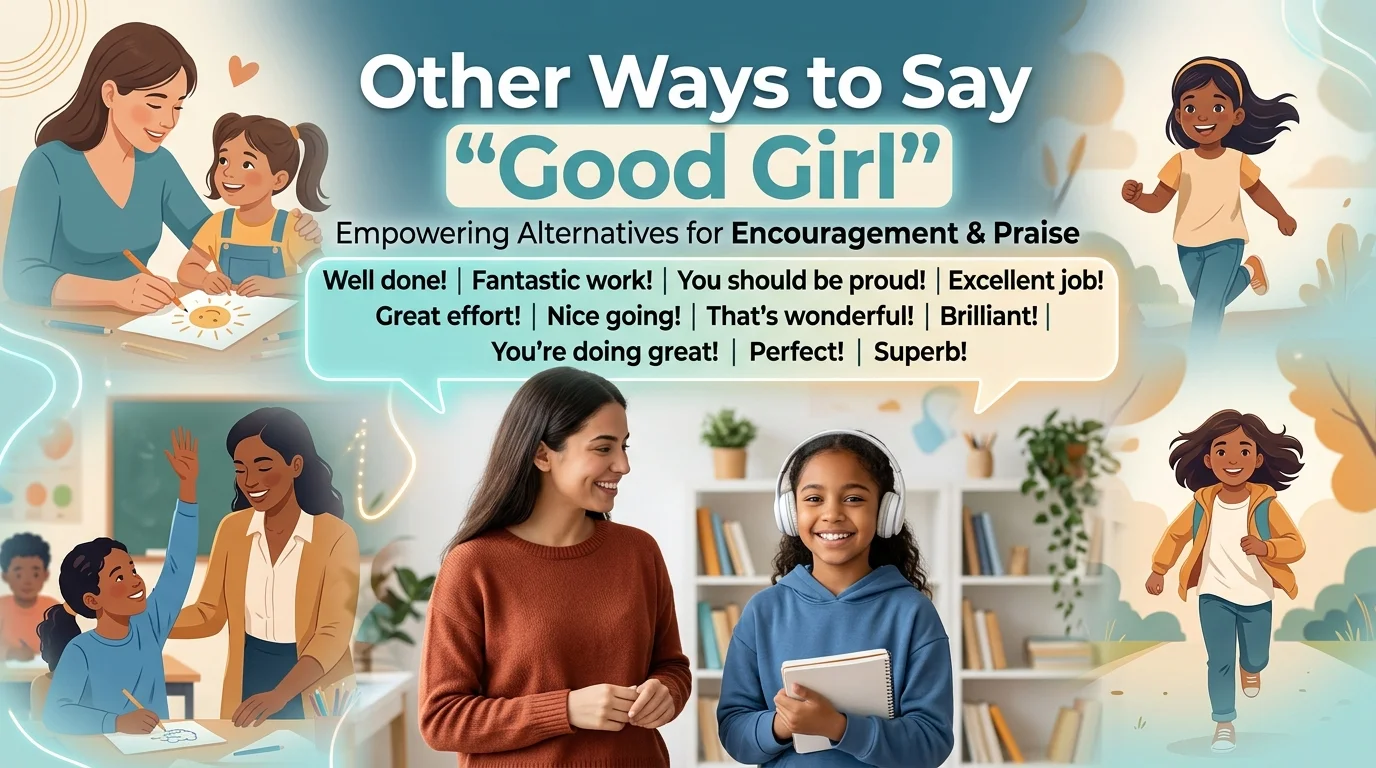
The phrase “good girl” is a common English expression used to praise someone for doing something well, following instructions, showing kindness, or making a good choice. Depending on the situation, it can communicate approval, affection, encouragement, or appreciation.
For example, a parent might say “Good girl!” when a child helps clean up her toys. A dog owner might use the same phrase to reward a well-trained pet. Someone might also use it affectionately with a close friend or romantic partner, although the expression can sound patronizing or carry a particular meaning in adult relationships.
Because the phrase has different meanings in different situations, it is useful to know other ways to express the same idea. Sometimes, “Well done!” sounds more appropriate. In other situations, “You did a great job,” “I’m proud of you,” or “That was very thoughtful of you” communicates appreciation more naturally.The phrase “good girl” is a common expression used to praise, encourage, or appreciate someone for doing something well. It can express approval, affection, encouragement, or happiness, depending on the situation and the relationship between the people involved. People often use this phrase with children, pets, friends, or loved ones to recognize good behavior or celebrate a small achievement.
However, “good girl” is not always the most suitable expression for every situation. While it can sound sweet, friendly, and encouraging in some contexts, it may seem childish, overly personal, or even patronizing in others, especially when speaking to an adult or a colleague in a professional environment. Choosing a different expression can help you communicate praise more naturally and appropriately.
There are many alternatives to “good girl” that express encouragement, appreciation, and admiration without changing the positive meaning behind the original phrase. For example, you can say “Well done,” “Great job,” “You did amazing,” “I’m proud of you,” or “You should be proud of yourself.” Each expression has a slightly different tone and works best in particular situations.
In this article, we will explore other ways to say “good girl” in everyday conversations, friendly interactions, professional settings, and affectionate relationships. Whether you are learning English, looking for more natural expressions, or simply trying to find the right words to praise someone, these alternatives will help you communicate with confidence and choose an expression that fits the situation.
Choosing the right expression also helps you avoid misunderstandings. For example, calling an adult woman “good girl” at work can sound condescending, even when the speaker intends to be encouraging. A professional compliment that recognizes someone’s effort or achievement is usually a better choice.
In this guide, you’ll discover more than 25 natural alternatives to “good girl,” including common expressions, formal and professional options, friendly compliments, casual phrases, and expressions suitable for texting. Each alternative includes a simple explanation, guidance on when to use it, and examples to help you understand how native American English speakers use these expressions.
What Does “Good Girl” Mean?
“Good girl” is an expression of praise or approval. It generally tells someone that their behavior, decision, or performance is pleasing or appropriate.
The exact meaning depends on the relationship between the speaker and the person being praised.
Here are three common uses:
- Praising a child: “Good girl! You remembered to put your books away.”
- Rewarding a pet: “Good girl, Bella! You came when I called you.”
- Expressing affection: “You did exactly what you promised. Good girl.”
The first two examples are common in everyday life. The third depends more heavily on the relationship and context.
When speaking to adults, especially in professional or unfamiliar settings, it’s usually better to choose a phrase that recognizes a person’s specific achievement or positive behavior.
25+ Common Alternatives to “Good Girl”
These expressions work in a variety of everyday situations. Some emphasize achievement, while others communicate affection, encouragement, or appreciation.
1. Well Done!
Meaning: This phrase expresses approval when someone completes a task successfully or achieves something worthwhile.
When to use it: Use “Well done!” when a child finishes homework, a friend completes a difficult project, or someone accomplishes a personal goal.
Tone: Friendly, encouraging, and suitable for both casual and many professional situations.
Examples:
- “Well done! You finished the entire assignment by yourself.”
- “You practiced every day, and it paid off. Well done!”
Why it works: “Well done!” focuses on the person’s accomplishment rather than suggesting that they are obedient. It is a versatile alternative when you want to recognize someone’s effort or success.
2. Great Job!
Meaning: “Great job!” means someone has done something successfully or performed particularly well.
When to use it: This expression is appropriate for children, friends, classmates, coworkers, and team members.
Tone: Casual, positive, and enthusiastic.
Examples:
- “Great job organizing your room!”
- “Great job on the presentation. You explained everything clearly.”
Why it works: It is one of the easiest alternatives to use because it recognizes an accomplishment without sounding overly formal. It also works well in everyday American English.
3. You Did a Great Job
Meaning: This phrase directly acknowledges that someone performed a task well.
When to use it: Use it after a completed activity, such as finishing a school project, preparing a meal, or delivering a presentation.
Tone: Friendly, supportive, and appropriate in personal or professional settings.
Examples:
- “You did a great job helping your little brother.”
- “You did a great job explaining that difficult concept.”
Why it works: Unlike “good girl,” this expression identifies the achievement as the reason for the praise. It is particularly useful when speaking to adults.
4. Excellent Work!
Meaning: This expression communicates strong approval of the quality of someone’s work.
When to use it: Use it in educational settings, at work, or whenever someone produces a high-quality result.
Tone: Professional, encouraging, and slightly more formal than “Great job!”
Examples:
- “Excellent work on the final report.”
- “Excellent work! Your answers show that you understand the lesson.”
Why it works: “Excellent work!” sounds polished and respectful. It is a strong choice when you want to praise a student or colleague without using language that sounds childish.
5. You Nailed It!
Meaning: This informal expression means someone did something extremely well or achieved exactly the desired result.
When to use it: Use it when a friend succeeds at a challenge, gives a great presentation, or gets an answer exactly right.
Tone: Casual, enthusiastic, and conversational.
Examples:
- “You nailed it! That was an amazing performance.”
- “You nailed the recipe. This cake tastes fantastic.”
Why it works: It adds energy and excitement to your praise. It is especially natural among friends and coworkers who communicate informally.
6. I’m Proud of You
Meaning: This phrase communicates pride in someone’s achievements, choices, personal growth, or efforts.
When to use it: Use it when a child learns something new, a friend overcomes a challenge, or someone makes a difficult but positive decision.
Tone: Warm, caring, and emotionally supportive.
Examples:
- “I’m proud of you for speaking up for yourself.”
- “You kept going even when things became difficult. I’m proud of you.”
Why it works: This expression often communicates more emotional depth than “good girl.” It recognizes not only what someone did but also the effort, courage, or growth behind it.
7. That’s My Girl!
Meaning: This affectionate expression communicates pride, excitement, or approval toward someone with whom the speaker shares a close relationship.
When to use it: It may be appropriate between a parent and child or among close friends and romantic partners, depending on their usual communication style.
Tone: Informal, affectionate, and enthusiastic.
Examples:
- “You finally stood up for yourself. That’s my girl!”
- “You finished your first race! That’s my girl!”
Why it works: It sounds more personal than “Great job!” However, it can feel possessive or patronizing in some situations, especially when used by someone who is not close to the person being praised.
8. You’re Amazing!
Meaning: This phrase expresses admiration for someone’s abilities, personality, actions, or accomplishments.
When to use it: Use it when someone does something impressive, offers meaningful support, or handles a challenging situation well.
Tone: Warm, enthusiastic, and friendly.
Examples:
- “You’re amazing! Thanks for helping me prepare for the interview.”
- “You handled that difficult conversation so well. You’re amazing!”
Why it works: It praises the person more broadly instead of focusing on obedience or a single action. It works well in both spoken conversations and messages.
9. Fantastic Job!
Meaning: “Fantastic job!” expresses enthusiastic approval of a successful performance or accomplishment.
When to use it: Use it after someone finishes a difficult task, creates something impressive, or performs well.
Tone: Energetic, informal, and encouraging.
Examples:
- “Fantastic job finishing the project ahead of schedule!”
- “You remembered every step of the dance. Fantastic job!”
Why it works: This expression makes praise sound enthusiastic without being overly personal. It is useful when you want to celebrate an achievement.
10. Keep Up the Good Work!
Meaning: This phrase encourages someone to continue doing something well.
When to use it: Use it when a person is making steady progress, developing a skill, or consistently performing well.
Tone: Encouraging, friendly, and suitable for professional situations.
Examples:
- “Your reading is improving every week. Keep up the good work!”
- “The team has made excellent progress. Keep up the good work.”
Why it works: Unlike “Well done!”, which usually recognizes something already completed, this phrase encourages continued effort. It is particularly useful when the person is still working toward a larger goal.
11. You Should Be Proud of Yourself
Meaning: This expression encourages someone to recognize the value of their own effort or achievement.
When to use it: Use it when someone accomplishes something difficult, makes progress, or overcomes self-doubt.
Tone: Supportive, reassuring, and encouraging.
Examples:
- “You studied hard and passed the exam. You should be proud of yourself.”
- “You handled that situation with courage. You should be proud of yourself.”
Why it works: It helps someone appreciate their own progress rather than relying entirely on another person’s approval.
12. That’s Impressive!
Meaning: This phrase communicates admiration for something that is especially skillful, difficult, or noteworthy.
When to use it: Use it when someone demonstrates a talent, solves a problem, or achieves an unexpected result.
Tone: Friendly, respectful, and suitable for professional or casual conversations.
Examples:
- “You learned to play that song in one week? That’s impressive!”
- “You completed the analysis in such a short time. That’s impressive.”
Why it works: It is a natural alternative when you want to recognize ability without sounding overly emotional or familiar.
13. You Did It!
Meaning: This expression celebrates the fact that someone has achieved a goal or completed a challenge.
When to use it: Use it when someone finally succeeds after practicing, trying repeatedly, or overcoming an obstacle.
Tone: Excited, supportive, and informal.
Examples:
- “You rode your bike without help. You did it!”
- “You finally passed your driving test. You did it!”
Why it works: It emphasizes the moment of success. It can be especially encouraging for children and anyone who has worked hard toward a personal goal.
14. That’s So Thoughtful of You
Meaning: This phrase expresses appreciation for a considerate or kind action.
When to use it: Use it when someone helps another person, remembers an important detail, or does something kind without being asked.
Tone: Warm, polite, and appreciative.
Examples:
- “You brought me coffee before my meeting? That’s so thoughtful of you.”
- “You remembered my birthday. That’s so thoughtful of you!”
Why it works: Sometimes the best alternative to “good girl” is a phrase that identifies the behavior you appreciate. This expression recognizes kindness rather than simply saying that someone’s behavior is good.
15. You’re Such a Star!
Meaning: This informal expression praises someone for doing something helpful, impressive, or successful.
When to use it: Use it with friends, family members, or coworkers in relaxed environments.
Tone: Friendly, playful, and enthusiastic.
Examples:
- “You picked up the groceries for me? You’re such a star!”
- “You fixed the problem before the deadline. You’re such a star!”
Why it works: It makes praise sound cheerful and personal. It is more common in some English-speaking communities than others, so “You’re amazing!” may be a more universally familiar option for American English learners.
16. You Make Me Proud
Meaning: This phrase tells someone that their actions or achievements create a feeling of pride in the speaker.
When to use it: Use it with close friends, family members, or people with whom you have an emotionally meaningful relationship.
Tone: Warm, personal, and affectionate.
Examples:
- “You worked hard and stayed honest. You make me proud.”
- “Watching you grow more confident makes me proud.”
Why it works: It emphasizes the emotional connection between the speaker and the person being praised. Because it can feel deeply personal, it is not always the best choice for casual workplace feedback.
17. Nicely Done!
Meaning: “Nicely done!” means someone completed something skillfully or successfully.
When to use it: Use it after a successful task, a clever solution, or a well-executed performance.
Tone: Friendly, positive, and moderately informal.
Examples:
- “Nicely done! You solved the puzzle.”
- “Nicely done on the presentation. Your examples made the topic easy to understand.”
Why it works: It is concise and natural. It also works for adults without the childlike quality that “good girl” can sometimes have.
18. You’re a Natural!
Meaning: This phrase means someone seems naturally talented at a particular activity.
When to use it: Use it when someone performs a new skill surprisingly well, such as dancing, cooking, drawing, or public speaking.
Tone: Casual, enthusiastic, and complimentary.
Examples:
- “You’ve only taken two lessons, and you’re already playing so well. You’re a natural!”
- “You made that speech look easy. You’re a natural at public speaking.”
Why it works: It praises apparent talent rather than obedience. However, it is best used when the person’s performance genuinely seems effortless; it may overlook the hard work behind their success if used carelessly.
19. Good for You!
Meaning: This phrase expresses approval or happiness about someone’s positive decision or achievement.
When to use it: Use it when a friend reaches a goal, takes a healthy step, or makes a decision that benefits them.
Tone: Informal and supportive, although its meaning depends on vocal tone.
Examples:
- “You decided to take a class you’ve always wanted to try? Good for you!”
- “You finally took some time off to relax. Good for you!”
Why it works: It can sound encouraging and sincere. However, if spoken sarcastically, “Good for you” can suggest indifference or criticism. Use a warm tone when you want to communicate genuine approval.
20. You’re Doing Great!
Meaning: This expression tells someone that they are performing well or making good progress.
When to use it: Use it during a learning activity, while someone is practicing a new skill, or when a person needs encouragement.
Tone: Supportive, friendly, and reassuring.
Examples:
- “You’re doing great! Just take your time with the next question.”
- “Learning a new language can be difficult, but you’re doing great.”
Why it works: It focuses on ongoing progress instead of expecting perfection. It is especially useful when someone needs reassurance rather than praise for a finished result.
FAQS
1. What is the best alternative to “good girl”?
“Well done!” and “Great job!” are two of the most versatile alternatives. They work in many everyday situations and focus on the person’s achievement rather than obedience. The best choice depends on your relationship with the person and what you want to praise.
2. Is “good girl” appropriate for adults?
It depends on the relationship and context. It may be affectionate between people who enjoy using that expression, but it can sound patronizing when directed at an adult woman in a professional or unfamiliar setting. “You did a great job” is usually a safer and more respectful choice.
3. What is a professional way to say “good girl”?
Professional alternatives include “Excellent work,” “You handled that exceptionally well,” “I appreciate your initiative,” and “Your contribution made a difference.” These phrases recognize competence, effort, and results.
4. What is a sweet way to say “good girl”?
Depending on your relationship, you could say “I’m proud of you,” “You’re amazing,” “That’s so thoughtful of you,” or “You have such a caring heart.” These expressions communicate warmth without necessarily sounding childish.
5. What can I say instead of “good girl” in a text?
Try “You did it!”, “You nailed it!”, “Proud of you!”, “That’s awesome!”, or “You’ve got this!” Use a phrase that matches the situation. For example, celebrate a completed goal with “You did it!” or encourage someone before a challenge with “You’ve got this!”
6. Is “good girl” the same as “well done”?
Not exactly. “Good girl” can praise general behavior, obedience, or a specific achievement, depending on context. “Well done” more directly recognizes that someone has completed something successfully. The latter is often more suitable for adult conversations.
7. Can I use “good girl” to praise a dog?
Yes. “Good girl” is a common verbal reward for a female dog. You can also use consistent cues such as “Good job,” “Well done,” or “Perfect.” During training, use your chosen cue consistently so your dog can associate it with the desired behavior.
Conclusion
There are many natural ways to say “good girl,” and the best alternative depends on the situation, your relationship with the person, and the message you want to communicate.
For everyday praise, expressions such as “Well done!”, “Great job!”, “You nailed it!”, and “You’re amazing!” are useful choices. If you want to show emotional support, try “I’m proud of you” or “You should be proud of yourself.” To recognize kindness, say “That was very thoughtful of you” or “I appreciate your kindness.”
In professional environments, phrases such as “Excellent work,” “I appreciate your initiative,” and “You handled that exceptionally well” sound respectful and emphasize competence. For casual conversations and text messages, “You rock!”, “Way to go!”, and “You’ve got this!” add enthusiasm and encouragement.
Remember that praise is most meaningful when it is sincere and appropriate to the relationship. Instead of relying on one expression, choose words that explain what you appreciate, whether it is effort, kindness, skill, progress, or achievement.
With these alternatives, you can communicate encouragement more clearly, avoid unintended misunderstandings, and make your compliments feel more natural in everyday American English.









