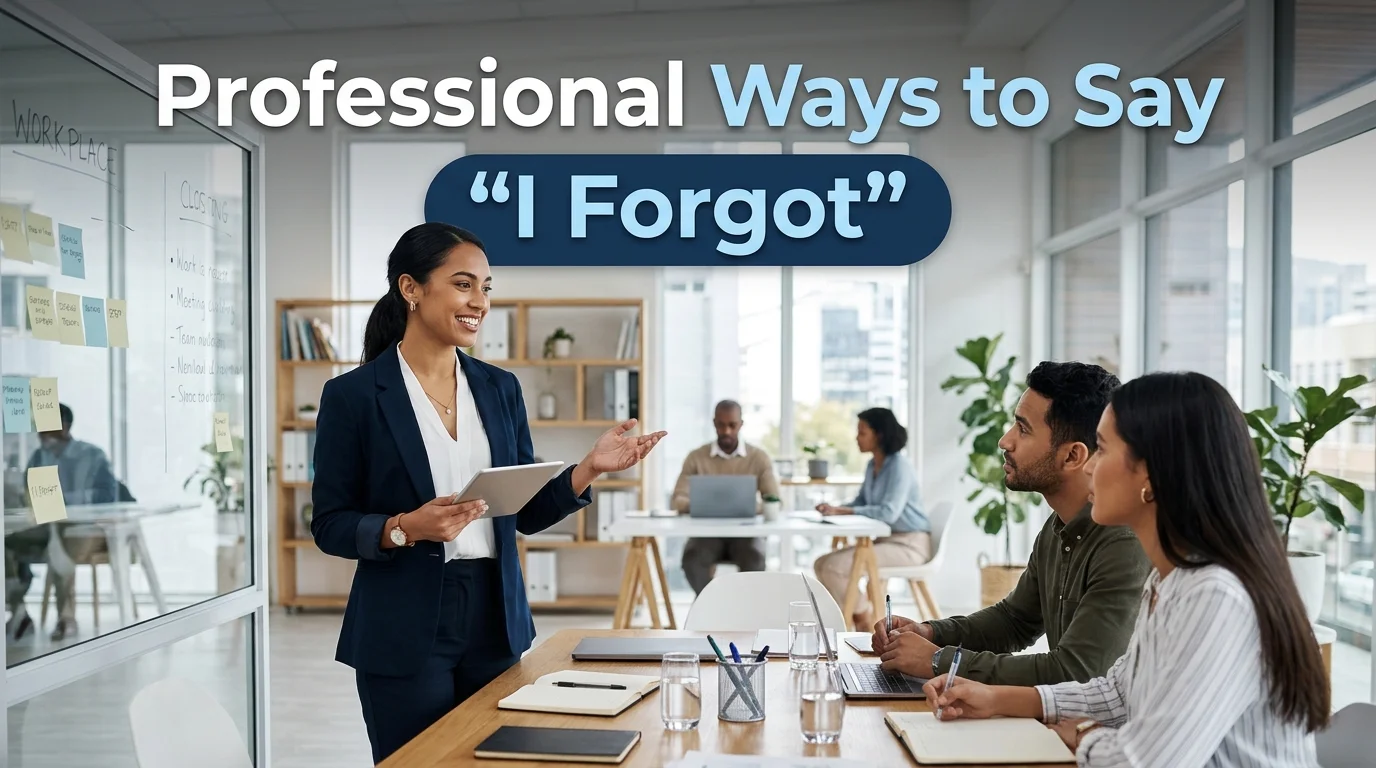
Forgetting something at work happens to everyone. You might forget to send an email, miss a meeting reminder, overlook an important deadline, or fail to bring up a detail during a conversation. When this happens, knowing how to explain the situation professionally can help you maintain trust, communicate clearly, and take responsibility for your mistake.
The phrase “I forgot” is simple and honest, but it can sometimes sound too casual in a professional setting. Depending on the situation, you may want to say “I overlooked that,” “It slipped my mind,” “I missed that detail,” or “I apologize for the oversight.”
These alternatives communicate the same general idea while offering different levels of formality, accountability, and politeness.Moving forward professionally” is a common expression used in workplace conversations, business emails, career discussions, and professional development plans.
It refers to making progress in your career, improving your skills, setting new goals, or taking positive steps toward future success. Whether you are discussing career opportunities, planning your next professional move, or communicating with colleagues and managers, this phrase helps express a focus on growth, improvement, and future possibilities.
However, using the same expression repeatedly can sometimes make your communication sound repetitive. Learning other ways to say “moving forward professionally” can help you express your ideas more clearly, confidently, and naturally.
Depending on the situation, you might want to use a formal phrase in a business email, a positive expression during a career discussion, or a straightforward alternative when talking about your professional goals. Choosing the right words can make your message more effective and leave a positive impression on employers, coworkers, and business partners.
There are many useful alternatives to this phrase, including “advancing my career,” “progressing professionally,” “developing my professional skills,” “taking the next step in my career,” and “working toward future career goals.” Although these expressions share a similar meaning, each has a slightly different emphasis. Some focus on career advancement, while others highlight personal development, new opportunities, or long-term professional success.
Choosing the right expression matters because professional communication is not only about what you say but also about how you say it. For example, telling a coworker “That slipped my mind” may sound natural during a quick conversation, while telling a client “I apologize for the oversight” may be more appropriate when you have missed an important detail.
In this guide, you will learn more than 25 professional and natural alternatives to “I forgot.” Each expression includes a simple explanation, guidance on when to use it, its tone, and practical examples. You will also discover how to apologize appropriately, explain a forgotten task in an email, and choose the best wording for different workplace situations.
What Does “I Forgot” Mean in a Professional Setting?
“I forgot” means that you failed to remember something you were supposed to remember or intended to do.
At work, the phrase might refer to several situations, including:
- Forgetting to reply to an email.
- Missing a scheduled meeting.
- Leaving out important information from a report.
- Forgetting to complete an assigned task.
- Failing to bring a document to a meeting.
- Overlooking a deadline or follow-up action.
- Forgetting to mention a detail to a colleague or client.
Although “I forgot” is grammatically correct, it can sound informal or incomplete when used alone in a professional conversation.
For example:
“I forgot to send the report.”
This statement is clear, but it does not acknowledge the inconvenience or explain what you will do next.
A more professional version would be:
“I apologize for the delay. I overlooked sending the report yesterday, but I’ll send it shortly.”
The second version takes responsibility, acknowledges the issue, and provides a solution.
The goal is not to hide the fact that you forgot. Instead, it is to communicate honestly while showing that you understand your responsibilities.
Why Use Professional Alternatives to “I Forgot”?
Using a suitable alternative can help you sound more thoughtful, respectful, and accountable.
Here are some important reasons to choose your words carefully.
1. To maintain professionalism: Phrases such as “I overlooked that detail” or “I apologize for the oversight” fit naturally into workplace emails and formal conversations.
2. To show accountability: Acknowledging what you missed demonstrates that you are willing to take responsibility rather than make excuses.
3. To express an appropriate level of regret: When your forgetfulness affects someone else, a sincere apology may be more suitable than a casual explanation.
4. To explain the situation clearly: Different phrases can distinguish between forgetting a task, missing a detail, and failing to notice something.
5. To focus on the solution: Adding a sentence about how you will correct the issue helps reassure colleagues, managers, and clients.
A useful professional response often follows this simple pattern:
- Acknowledge what happened.
- Apologize if your mistake caused inconvenience.
- Explain the corrective action.
- Follow through on your commitment.
For example: “I overlooked the attachment in my previous email. I apologize for the oversight and have attached the correct file here.”
This approach is honest, clear, and focused on resolving the problem.
1. Common Professional Alternatives to “I Forgot”
These expressions are useful in everyday workplace communication. They work in emails, conversations, meetings, and messages to colleagues.
1. I Overlooked That
Meaning: You failed to notice or consider something important.
When to use it: Use this expression when you missed a detail, instruction, request, or piece of information. It is especially useful when the information was available but you did not notice it.
Tone: Professional, neutral, and polite.
Examples:
- “I overlooked that detail in the original report. I’ll correct it right away.”
- “You’re right. I overlooked that requirement when reviewing the document.”
This phrase sounds professional because it focuses on what you missed rather than making a broad statement about your memory.
However, “overlooked” is most appropriate when you failed to notice something. If you completely forgot to attend an appointment, another expression may be more accurate.
2. That Slipped My Mind
Meaning: You forgot something unintentionally.
When to use it: Use it in relaxed workplace conversations with coworkers, managers you know well, or team members. It works when the mistake is relatively minor.
Tone: Casual, friendly, and conversational.
Examples:
- “I’m sorry, that slipped my mind. I’ll send you the file this afternoon.”
- “The meeting reminder slipped my mind, but I’ve added it to my calendar now.”
This is one of the most natural alternatives to “I forgot.” It sounds less blunt while remaining honest.
For a formal client email or a serious missed deadline, however, “I apologize for the oversight” may be more appropriate.
3. I Missed That Detail
Meaning: You failed to notice or include a particular piece of information.
When to use it: Use it when reviewing documents, checking instructions, discussing a project, or responding to feedback.
Tone: Professional and neutral.
Examples:
- “I missed that detail in the project brief. I’ll update the plan accordingly.”
- “Thank you for pointing that out. I missed that detail during my review.”
This expression is especially useful when you want to identify exactly what went wrong. It does not necessarily mean that you forgot everything; it simply acknowledges a specific detail you missed.
4. I Didn’t Remember to Do That
Meaning: You failed to remember that you needed to complete a particular action.
When to use it: Use it when you forgot to perform a task, such as sending a message, updating a file, or following up with someone.
Tone: Neutral, direct, and conversational.
Examples:
- “I didn’t remember to update the spreadsheet yesterday, but I’ll take care of it now.”
- “I didn’t remember to include the final figures in the presentation. I’ll add them before the meeting.”
This expression is clear and honest, although it can sound slightly less polished than “I overlooked that task.” In formal situations, pair it with an apology or a corrective action.
5. I Forgot to Follow Up
Meaning: You failed to contact someone again or check on a matter as planned.
When to use it: Use it when you did not send a follow-up email, make a promised call, check a project’s progress, or respond after an earlier conversation.
Tone: Professional and direct.
Examples:
- “I apologize. I forgot to follow up on your request, but I’ll send an update today.”
- “I forgot to follow up with the supplier. I’ll contact them this morning.”
This phrase is useful because it clearly identifies the missed responsibility. It is usually better than saying only “I forgot” when another person is waiting for a response.
2. Formal Alternatives to “I Forgot”
Formal expressions are especially useful when communicating with senior managers, clients, business partners, or people outside your organization.
6. I Apologize for the Oversight
Meaning: You acknowledge that you failed to notice, remember, or handle something that required your attention.
When to use it: Use it in formal emails, business correspondence, reports, and conversations about professional mistakes.
Tone: Formal, polite, and accountable.
Examples:
- “I apologize for the oversight. I’ve updated the document to include the missing information.”
- “Please accept my apologies for the oversight in the original submission.”
This is one of the strongest professional alternatives because it communicates regret without sounding overly casual.
It is particularly appropriate when the forgotten detail has affected a document, decision, or process.
7. I Regret the Omission
Meaning: You express regret that you left out information or failed to include something.
When to use it: Use it when you have omitted a detail from a report, proposal, presentation, or formal communication.
Tone: Formal and professional.
Examples:
- “I regret the omission of the updated figures from the report.”
- “I regret that this important detail was omitted from my previous message.”
An omission is something left out. This expression is therefore more specific than “I forgot.”
It works best when information was missing from something you prepared or sent, rather than when you forgot to attend a meeting.
8. I Failed to Take That Into Account
Meaning: You did not consider a relevant factor when making a decision or completing a task.
When to use it: Use it when you forgot to consider a requirement, deadline, cost, limitation, or other important factor.
Tone: Formal, professional, and accountable.
Examples:
- “I failed to take the revised deadline into account when preparing the schedule.”
- “I should have considered the additional costs, and I apologize for failing to take them into account.”
This phrase is useful when the problem resulted from missing information during planning or decision-making.
It does not always mean that you forgot something. Sometimes it means you knew about the information but did not consider its importance.
9. I Regret That I Failed to Remember
Meaning: You express regret that you did not remember a specific responsibility or detail.
When to use it: Use it in formal explanations when you need to acknowledge a genuine memory lapse.
Tone: Formal, serious, and apologetic.
Examples:
- “I regret that I failed to remember to include the supporting document.”
- “I regret that I failed to remember the scheduled review and apologize for the inconvenience.”
This expression is grammatically correct, but it can sound heavy or overly elaborate in ordinary business writing.
A simpler alternative, such as “I apologize for missing the scheduled review,” is often more natural.
10. I Was Remiss in Addressing This
Meaning: You acknowledge that you did not give something the attention or action it deserved.
When to use it: Use it in formal or carefully worded communication when you neglected a responsibility, follow-up, or important matter.
Tone: Formal, reflective, and professional.
Examples:
- “I was remiss in addressing your earlier message, and I apologize for the delay.”
- “I was remiss in following up on the request. I’ll make sure it is handled today.”
“Remiss” means careless about a duty or responsibility. It is less common in everyday conversation, so use it when the formality fits the situation.
3. Professional Alternatives for Workplace Emails
These expressions work well when you need to acknowledge a mistake while maintaining a professional relationship.
11. I Missed This in My Previous Review
Meaning: You did not catch something when you previously examined a document, request, or task.
When to use it: Use it when correcting a report, checking a proposal, reviewing a contract, or responding to feedback from a colleague.
Tone: Professional and accountable.
Examples:
- “I missed this in my previous review. I’ll update the figures and resend the report.”
- “Thank you for bringing this to my attention. I missed it during my initial review.”
This expression is useful because it identifies when the mistake occurred. It also allows you to acknowledge the issue without making an unnecessarily long explanation.
12. I Failed to Address This Earlier
Meaning: You did not respond to or deal with something when you should have.
When to use it: Use it when you forgot to answer a question, resolve an issue, or complete a necessary step.
Tone: Professional, direct, and serious.
Examples:
- “I apologize for failing to address this earlier. I’ll provide a complete response by the end of the day.”
- “I failed to address your concern in my previous email, and I appreciate your patience.”
This phrase focuses on an unfinished responsibility rather than forgetfulness itself. It is useful when a colleague or client has been waiting for you to take action.
13. I Overlooked Your Earlier Message
Meaning: You did not notice or properly attend to a message someone sent earlier.
When to use it: Use it when you forgot to respond to an email, text, or workplace chat.
Tone: Professional and polite.
Examples:
- “I apologize for the delayed response. I overlooked your earlier message.”
- “Thank you for following up. I overlooked your previous email and will review the attachment today.”
This is a tactful way to explain a delayed response. It is most appropriate when the message was missed among other communications.
If you saw the message but intentionally postponed answering, it is better to describe the delay honestly rather than imply that you overlooked it.
14. I Didn’t Account for That in My Planning
Meaning: You failed to consider a factor when organizing a task or creating a plan.
When to use it: Use it when a forgotten requirement, dependency, or deadline affects a schedule or project.
Tone: Professional and explanatory.
Examples:
- “I didn’t account for the additional review time in my planning. I’ll revise the schedule.”
- “I didn’t account for the supplier’s holiday closure, so the delivery estimate needs to be updated.”
This phrase works well in project management and team discussions. It acknowledges a planning gap and creates an opportunity to explain how you will correct it.
15. I Failed to Include That Information
Meaning: You left necessary information out of a document, presentation, email, or report.
When to use it: Use it when correcting incomplete work or responding to someone who points out missing information.
Tone: Professional, direct, and accountable.
Examples:
- “I failed to include that information in the original report. I’ve added it to the revised version.”
- “I apologize for failing to include the updated pricing details in my email.”
This expression is more precise than “I forgot” because it identifies the outcome of the mistake.
It is a good choice when you want to focus on the correction rather than the reason the information was missing.
16. I Didn’t Keep Track of That
Meaning: You did not monitor or remember the status, details, or timing of something.
When to use it: Use it when you lost track of a deadline, follow-up, update, or ongoing task.
Tone: Neutral and conversational, sometimes professional.
Examples:
- “I didn’t keep track of the revised deadline, so I missed the update.”
- “I should have kept better track of the follow-up date. I’ll add a reminder to my calendar.”
This expression can be useful when the issue involves organization or monitoring rather than a single forgotten detail.
Be careful with it when the responsibility is important. In some situations, it can sound as though you did not manage your work carefully enough.
4. Polite Alternatives That Include an Apology
When your forgetfulness has inconvenienced another person, a polite apology can help repair the situation. The most effective apology is sincere, specific, and followed by action.
17. I’m Sorry, That Slipped My Mind
Meaning: You apologize for forgetting something unintentionally.
When to use it: Use it in conversations or messages with coworkers, supervisors, or familiar professional contacts.
Tone: Polite, friendly, and conversational.
Examples:
- “I’m sorry, that slipped my mind. I’ll send the revised document right away.”
- “I’m sorry I missed the reminder. I’ve added the deadline to my calendar.”
This phrase sounds natural and approachable. It is suitable for minor mistakes, but for a serious error or a formal client complaint, a more direct apology may be better.
18. I Apologize for Missing That
Meaning: You acknowledge that you failed to notice or remember something important.
When to use it: Use it when responding to feedback, correcting an error, or acknowledging a missed detail.
Tone: Professional, polite, and accountable.
Examples:
- “I apologize for missing that point in the meeting notes.”
- “I apologize for missing that requirement in the original proposal. I’ll correct it today.”
This expression is flexible. It can refer to information, an instruction, a detail, or an opportunity to take action.
19. I’m Sorry for the Oversight
Meaning: You express regret for failing to notice, remember, or include something.
When to use it: Use it in emails and conversations when a mistake has caused confusion, extra work, or inconvenience.
Tone: Professional, polite, and sincere.
Examples:
- “I’m sorry for the oversight. The corrected document is attached.”
- “I’m sorry for the oversight in my earlier message. I’ve included the missing details below.”
This phrase is slightly less formal than “I apologize for the oversight” but communicates a similar message.
20. I Should Have Caught That
Meaning: You acknowledge that you were expected to notice something but failed to do so.
When to use it: Use it when discussing a missed error, overlooked detail, or problem that should have been identified during a review.
Tone: Professional, candid, and accountable.
Examples:
- “You’re right. I should have caught that error before sending the report.”
- “I should have caught the missing figures during the final review. I’ll correct them now.”
This expression is useful because it shows ownership without blaming other people.
It is especially appropriate when reviewing mistakes with a manager or teammate.
21. I Apologize for the Delay in Addressing This
Meaning: You apologize because you did not respond to or handle a matter as promptly as expected.
When to use it: Use it when you forgot to reply to a message, resolve a concern, or complete an action on time.
Tone: Formal, polite, and professional.
Examples:
- “I apologize for the delay in addressing this request. I’ll send the requested information this afternoon.”
- “Please accept my apologies for the delay in responding. I’ve now reviewed the document and added my comments.”
This wording is especially helpful when the delay matters more than the reason behind it. You do not always need to explain that you forgot; acknowledging the delay and resolving the issue may be enough.
FAQs
1. What is the most professional way to say “I forgot”?
“I overlooked that” and “I apologize for the oversight” are strong choices. Use “I overlooked that” when you missed a detail, and “I apologize for the oversight” when you need to acknowledge a mistake more formally.
2. How do I say “I forgot” politely in an email?
You can write, “I apologize for overlooking this earlier. I’ve now addressed the issue and included the missing information.” This wording acknowledges the mistake, expresses regret, and explains what you have done to correct it.
3. Is “That slipped my mind” professional?
It can be appropriate in a relaxed workplace, especially when talking with familiar colleagues. For a formal client email or a serious mistake, “I apologize for the oversight” or “I missed that detail” may be a better choice.
4. How do I apologize for forgetting an important task?
Acknowledge the task, apologize sincerely, and explain how you will resolve the issue. For example: “I apologize for missing the deadline. I’ll complete the report by 3 p.m. and add a reminder to prevent this from happening again.”
5. What can I say instead of “I completely forgot”?
Depending on the situation, you can say “That slipped my mind,” “I overlooked that,” “I missed that detail,” or “I failed to follow up.” Choose the phrase that best describes what happened.
6. Should I explain why I forgot something at work?
Explain the reason when it helps the other person understand a relevant circumstance or make a decision. Keep the explanation brief and avoid using it to shift blame. Always focus on how you will address the problem.
7. How can I avoid forgetting tasks at work?
Use a calendar, set reminders, keep a daily task list, and record deadlines as soon as you receive them. For recurring responsibilities, checklists can help you follow the same steps consistently. Choose a system you can maintain rather than relying on memory alone.
Conclusion
There are many ways to say “I forgot” professionally, and the best expression depends on what happened, who you are speaking to, and how serious the situation is.
For everyday workplace conversations, “That slipped my mind” and “I missed that detail” are natural choices. For formal emails, “I apologize for the oversight” and “I regret the omission” communicate regret more professionally. If you forgot to reply to someone, “I overlooked your earlier message” can explain the delay. When a mistake affects a deadline or important responsibility, “I take responsibility for missing this” shows accountability.
Remember that professional communication is not about finding a way to make every mistake sound less serious. It is about being honest, respectful, and solution-focused. Acknowledge what happened, apologize when appropriate, and explain how you will correct the problem.
For example, instead of writing only “I forgot to send the report,” you could say, “I apologize for overlooking the report yesterday. I’ve attached it here and will make sure future deadlines are added to my calendar.”
A clear explanation, a sincere apology, and a practical next step can help you maintain trust and handle workplace mistakes with confidence.